Why Invest in Utility-Scale Solar Power Plants
- Home
- FAQ
Why Invest in Utility-Scale Solar Power Plants with Battery Storage
- Longevity
- Profitability
- Clients
- Humanitarian Impact
- How It Works
- Revenue & Costs
Investment Thesis
Proven Infrastructure
Scalable technology with exceptional longevity: 25 years for photovoltaic systems and 10 years for battery systems with strategic augmentation programs. Established track record demonstrates reliable performance across diverse market conditions and geographic locations.
Multiple Revenue Streams
Energy storage options allows efficient use of solar power plants (PV Parks) while maximizing revenue during peak hours.
Favorable Market Dynamics
Technology costs continue declining while electricity demand surges from data centers, electric vehicles, and broader electrification trends. Supply-demand dynamics create increasingly favorable investment conditions for new projects.
Risk Mitigation & Resilience
Natural hedge against fuel price volatility and carbon regulatory risk. Enhanced grid reliability and resilience capabilities position these assets as critical infrastructure investments for energy security and climate adaptation.
How Solar + Battery Storage Works
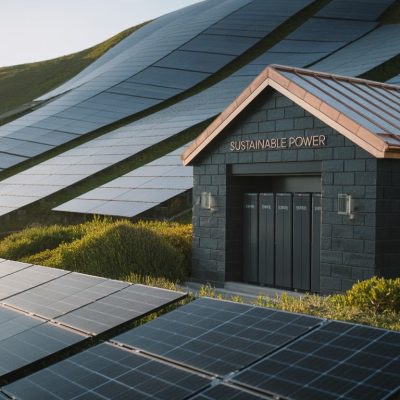
Solar Generation
Photovoltaic modules convert sunlight directly into DC electricity through semiconductor technology. Advanced inverters then convert DC power to AC electricity compatible with grid transmission and distribution systems.
Intelligent Controls
Sophisticated control systems optimize charge and discharge cycles based on real-time price signals, grid curtailment avoidance, and ancillary service requirements.
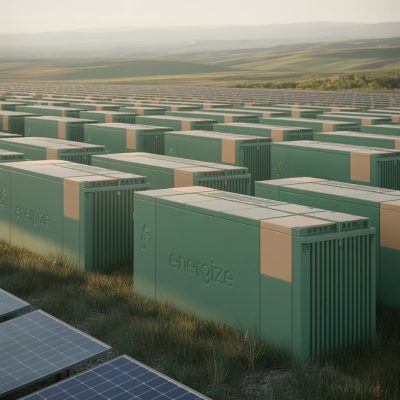
Energy Storage Integration
Battery Energy Storage Systems (BESS) capture excess solar generation during peak production hours and strategically dispatch stored energy during highprice periods or peak demand events, optimizing revenue capture.
Grid Integration
Direct interconnection at transmission substations with comprehensive SCADA and Energy Management Systems enabling advanced monitoring, forecasting, and automated market dispatch.
How Energy is Priced to End Users
01
Power Purchase Agreements
Long-term contracts spanning 5-20 years with fixed or indexed pricing per MWh. These agreements provide revenue certainty and form the backbone of project financing structures
for institutional investors
02
Day-ahead and real-time market participation with prices shaped by time-of-day patterns, transmission congestion, and supply-demand dynamics. Offers price upside potential but
requires sophisticated risk management.
03
Resource adequacy compensation for maintaining available generating capacity during peak reliability periods. Provides stable revenue stream independent of energy production
volumes.
04
Ancillary Services
Grid support services including frequency regulation, spinning reserves, voltage support, and reactive power. Battery storage systems excel at providing these high-value, fast-response
services.
05
Structured wheeling arrangements and regulated transfer mechanisms serving specific commercial and industrial offtakers through existing transmission and distribution
infrastructure.
Who Are the Clients & How Do They Pay?
Utilities & System Operators
Primary offtakers operating under regulated frameworks, paying through power purchase agreements, capacity markets, and ancillary service mechanisms. Provide most stable and bankable revenue streams for project financing.
Commercial & Industrial
Large energy users seeking direct corporate PPAs or behind-the-meter solutions. Include tech companies, manufacturers, and retail chains pursuing sustainability goals and price certainty for operational planning.
Municipalities & Cooperatives
Public sector entities requiring budget certainty through fixed-price, long-term agreements. Often incorporate community benefits and local economic development objectives into procurement processes.
Energy Traders & Retailers
Market intermediaries engaging in merchant purchases, financial hedging instruments, and tolling agreements. Provide market liquidity and risk transfer mechanisms for project developers
Development Finance Institutions
International development organizations and NGOs providing results-based financing in emerging markets, often tied to energy access and climate impact metrics rather than purely commercial returns.
Revenue Streams (Solar + Storage)
Energy Sales
Core revenue from electricity generation sold under PPA or merchant market arrangements
Environmental Attributes
Renewable Energy Certificates, carbon credits, and other environmental commodity sales
Energy Arbitrage
Time-shifting value: charge during lowprice periods, discharge during highprice periods
Capacity Payments
Fixed annual payments for maintaining available generating capacity during peak periods
Ancillary Services
Grid support services: frequency regulation, reserves, black start, fast frequency response
Longevity & Reliability
01
PV Modules: 25-30 Years
Industry-standard warranties with proven degradation rates of just 0.330.7%
annually. Extensive field data confirms performance reliability across diverse
environmental conditions and climate zones.
02
Inverters: 10-15 Years
Planned replacement cycles with comprehensive O&M strategies covering
spare parts inventory and preventive maintenance. Technology improvements
extend operational efficiency over asset life
03
Battery Systems: 10-15 Years
Cycle-based life expectancy with strategic augmentation programs maintaining nameplate capacity. Advanced battery management systems optimize performance and extend useful life.
04
Control Systems: Continuous
Regular SCADA and EMS upgrades ensure optimal performance and enable integration of advanced revenue optimization algorithms throughout the asset lifecycle.
Humanitarian & ESG Benefits

Energy Access Expansion
Provides reliable electricity to underserved regions, powering essential services including health clinics, schools, and small businesses that drive local economic development.
Environmental Health Impact
Significantly reduces air pollution and CO¢ emissions, directly improving public health outcomes in communities previously dependent on fossil fuel generation.
Local Economic Development
Creates sustainable employment across engineering, procurement, construction, operations, maintenance, logistics, and supply chain management throughout project lifecycle
Critical Service Resilience
Enables reliable power for essential infrastructure including water treatment, telecommunications, and emergency medical services, particularly valuable during grid disruptions.
These projects directly support UN Sustainable Development Goal 7 (Affordable & Clean Energy) while
enabling corporate and institutional investors to meet net-zero commitments through measurable
climate impact.
Cost Structure
Solar PV Capital Expenditure
- Development and permitting costs
- Land acquisition or lease agreements
- Grid interconnection and transmission
- PV modules, inverters, and racking systems
- Balance of system components
- Engineering, procurement, and construction
Battery Storage Capital Expenditure
- Battery packs (cells and modules)
- Power conversion systems and inverters
- Housing containers and structural systems
- Energy management and control systems
- Fire safety and suppression systems
- Integration and commissioning
Operating Expenditure
Operations and maintenance, land lease payments, insurance premiums, property taxes, telemetry and IT systems, battery augmentation reserves, and ongoing financing fees.
Development Costs
Construction period interest (IDC) and project contingency reserves typically ranging 5310% of total project investment to account for schedule and cost variations
Typical Cost Ranges (2025 Snapshot)
$0.75-&
Per MWac all-in EPC costs, highly
dependent on site
characteristics, interconnection
requirements, and regional
market conditions
$250-450
Per kWh all-in EPC costs,
trending downward as supply
chains normalize and
manufacturing scales contin
$12-20
Per kW-year fixed operations
and maintenance costs for PV
systems, covering routine
maintenance, monitoring, and
performance optimization
Critical Note: Interconnection and grid upgrade requirements can materially impact total project costs, potentially adding 10330% in markets with constrained transmission infrastructure or complex grid integration requirements.
Returns & Risk Management

Target Investment Returns
Revenue Certainty Mechanisms
Financial Risk Mitigation
Key Risk Factors
Permitting delays, interconnection queue management, supply chain disruptions, foreign exchange exposure, and evolving policy landscapes require active management and contingency planning
Mitigation Strategies
Comprehensive risk allocation in contracts, appropriate contingency reserves, diversified supplier relationships, and experienced development partners reduce execution risk.
EPC Service Provider Functions
N
Engineering & Design
Front-end engineering, detailed design development, and comprehensive procurement planning ensure optimal system configuration and performance.
Construction & Installation
Civil works, electrical systems installation, mechanical assembly, and systematic commissioning with comprehensive performance testing protocols.
Quality & Safety Management
Rigorous QA/QC procedures, health and safety protocols, schedule control, budget management, and comprehensive document control systems.
Project Handover
System commissioning, operations training, spare parts strategy development, and comprehensive warranty administration for long-term asset performance.
Key Vendors & Partners
Technology Suppliers
Module and inverter OEMs, tracker and racking system suppliers, electrical cables and balance-ofsystem component manufacturers providing core technology platforms.
Storage Specialists
Lithium iron phosphate battery OEMs, power conversion system providers, energy management system developers, and fire suppression integration specialists.
Advisory Services
Owner's Engineers, Independent Engineers, technical due diligence providers ensuring project quality and performance validation for financing and insurance.
Financial Partners
Construction and term debt lenders, tax equity investors, insurance providers, and project finance specialists structuring optimal capital solutions.
Operational Services
Asset management providers, O&M contractors, energy trading and market optimization specialists, and long-term offtakers ensuring revenue realization.
Contracting & Commercial Structure
EPC Contracting
Lump-sum turnkey (LSTK) arrangements with comprehensive performance guarantees and liquidated damages provisions ensuring delivery certainty and performance accountability.
Supply Chain Management
Strategic agreements including price and currency hedging, milestone-based delivery schedules, and comprehensive equipment warranties protecting against market volatility.
Grid Integration
Interconnection agreements with milestone-based progression, curtailment protection terms, and advanced metering infrastructure ensuring reliable grid connectivity.
Revenue Contracts
Power purchase agreements, resource adequacy participation, ancillary service market access, and renewable energy certificate sales maximizing revenue capture.
Project Financing
Construction loan facilities, long-term debt arrangements, equity commitments, and potential blended finance or development finance institution participation.
Cash Flows to the Project Company
Energy Revenue
Monthly invoicing for electricity generation (MWh × contracted price) delivered to utility or commercial & industrial offtakers under long-term agreements.
Capacity Payments
Annual or monthly payments ($/kW-year) based on accredited generating capacity and demonstrated availability during peak reliability events.
Ancillary Service Settlements
Market-based compensation ($/MW-hour) for grid support services provided through independent system operator platforms and bilateral agreements.
Environmental Attribute Sales
Renewable Energy Certificate, Guarantees of Origin, and carbon credit sales providing additional revenue streams aligned with corporate sustainability objectives.
Investor Distributions
Net cash available for distribution to developers, sponsors, and financial partners after operating expenses, debt service, and required reserve account funding.
Policy & Market Tailwinds
Global Renewable Energy Targets
International commitment to triple renewable energy capacity by 2030 creates unprecedented demand for utility-scale solar and storage infrastructure investments.
Demand Growth Drivers
Exponential growth in data center electricity consumption, electric vehicle adoption, and industrial electrification significantly increases peak demand and storage value.
Market Structure Evolution
Regulatory frameworks increasingly recognize and compensate energy storage for capacity, ancillary services, and grid flexibility, expanding revenue opportunities.
Carbon Pricing & ESG Mandates
Expanding carbon pricing mechanisms and corporate environmental, social, and governance requirements improve the comparative economics of renewable energy investments.

Impact Use-Cases (Global)
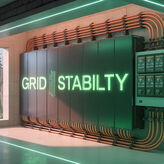
Grid Stabilization
Addresses duck curve challenges in high-solar penetration regions by storing excess midday generation and providing dispatchable capacity during evening peak demand periods.

Diesel Displacement
Replaces expensive, polluting diesel generation on islands and remote communities with clean, reliable renewable energy and storage systems reducing fuel import dependence.

Critical Service Resilience
Provides backup power for hospitals, water treatment facilities, telecommunications infrastructure, and emergency services during grid outages and extreme weather events.

Corporate Decarbonization
Enables commercial and industrial decarbonization through direct corporate power purchase agreements and sleeved renewable energy supply arrangements.
Next Steps for Investors
01
Market Selection & Offtake Strategy
Identify target markets with favorable regulatory environments and initiate interconnection queue studies. Develop offtake strategy aligned with investor risk-return objectives.
02
Technical & Commercial Validation
Engage qualified EPC contractors and original equipment manufacturers for site-specific quotations. Validate technical and commercial assumptions with independent engineering analysis.
03
Financial Modeling & Due Diligence
Develop comprehensive bankability model including P50/P90 generation analysis, sensitivity testing, and scenario planning. Secure preliminary financing commitments and term sheets.
04
ESG Integration & Project Execution
Develop environmental, social, and governance framework including community benefits planning. Finalize permitting, land agreements, and regulatory approvals for construction commencement.
Selected References
Cost & Technology Analysis
- Lazard Levelized Cost of Energy+ 2025 Analysis
- NREL Annual Technology Baseline 2024 & 2025 Storage Update
- BloombergNEF Energy Storage Market Outlook
Market & Policy Research
- IEA World Energy Outlook 2024
- IRENA Renewable Energy and Jobs Report 2024
- Wood Mackenzie Power & Renewables Market Analysis
Development Finance & Impact
- World Bank Energy Access Progress Report 202432025
- International Finance Corporation Emerging Markets Analysis
- Reuters Market Coverage & Industry Analysis 2025
These authoritative sources provide comprehensive market intelligence, technology cost trends, policy developments, and financing mechanisms supporting investment decision-making in utility-scale solar plus storage infrastructure.